
ISTEP offers a range of graduate courses in key transdisciplinary competencies like leadership, communication, project management and engineering education. These courses are designed to complement your engineering discipline-focused graduate studies, offering skill development to support your career planning, research experience and personal/professional development.
Our graduate courses are open to all M.Eng, M.A.Sc. and Ph.D. students.
2025-26 Offerings
TEP5500: Research Methods & Project Execution
Winter | Weds & Fri: 9 - 11 AM
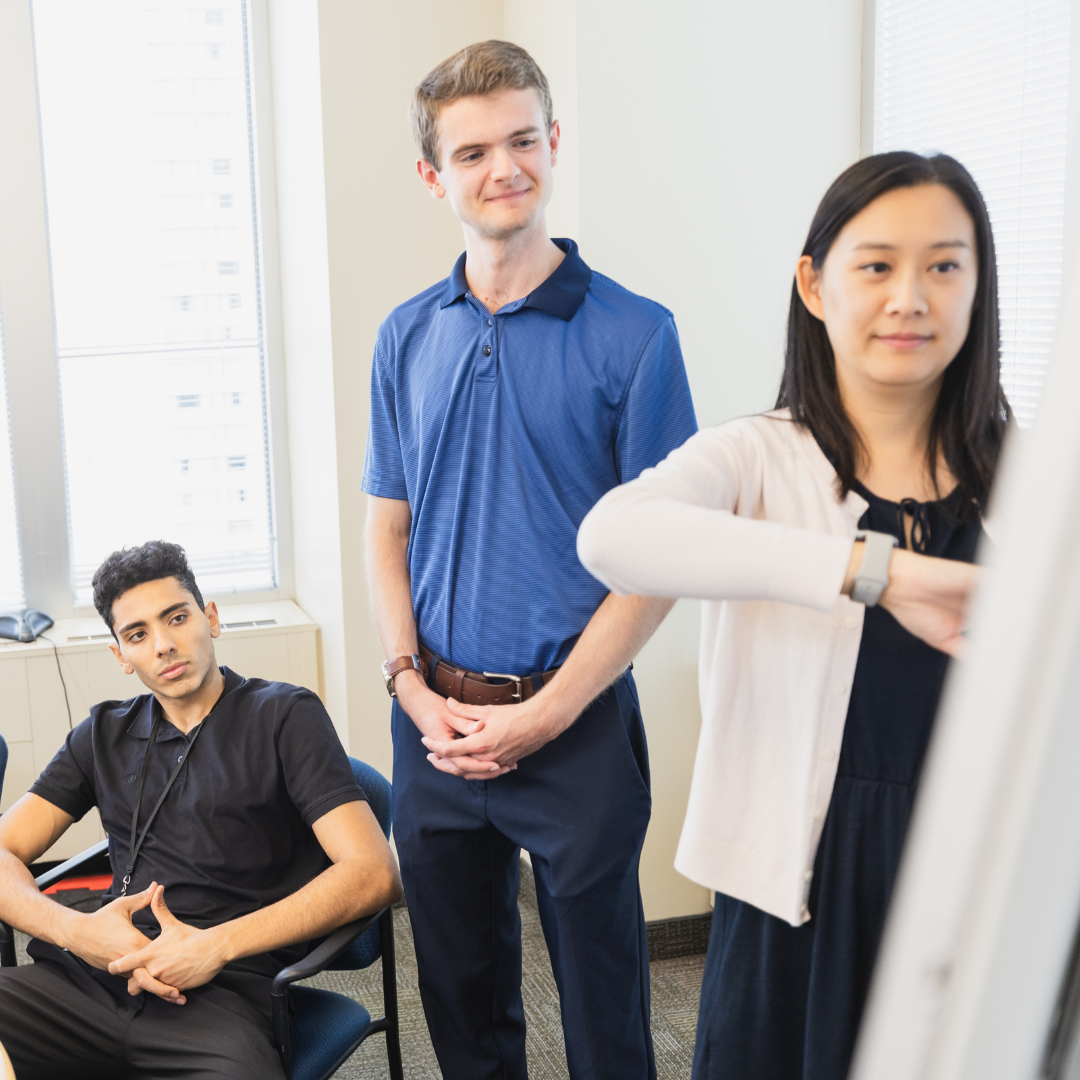
Successful completion of your graduate program relies on strong research, critical thinking and communication skills. These qualities will continue to help you achieve success as you transition into the workforce, whether you enter industry or pursue a career in academia. This course provides training in these areas while focusing on your current research project, simultaneously providing you with future training and immediately applicable strategies to help you complete your thesis research project. Through facilitated activity-based workshops you will develop your research and project management skills, acquire strategies to identify and articulate a research hypothesis, set research goals and plan your research approach (including quantification of results and validation of quantitative metrics), and share research findings via oral, written and graphical communication.
TEP1501: Leadership and Leading in Groups and Organizations
Fall | Tues: 6 - 9 PM
This course will examine leadership in relation to technology and the engineering profession. Topics will include: leadership theories, historic and current leaders, ethical leadership, teaming and networking, productivity and innovation, thinking frameworks, business leadership, and influencing people. Through this course students will explore their own leadership abilities and develop or strengthen their competencies in areas such as managing conflict, team dynamics, running effective meetings, developing others, and creation of vision and mission statements. The course will be delivered through lectures, workshops, readings, and guest speakers.

TEP1440: To Engineer is Human
Fall | Tues & Weds (Time TBD)
Behind every engineering feat is a human story. Students will learn to examine this often-overlooked perspective of engineering and its implications for engineering work. Engineering is at its core a human activity geared at helping to attain human goals, which requires the integration of many viewpoints, technical and non-technical. Drawing on perspectives from humanities and social science disciplines (e.g., sociology, anthropology, psychology, history, and political science) students will explore aspects of the human condition as it relates to engineering work: particularly the complexity of individuals, the contexts in which they operate, and how this shapes collaborative work. They will develop an appreciation for and skills to engage in the interdisciplinary work that engineering entails by examining conceptions of engineering, as well as the humanities and social and their intersections with engineering. Students will integrate these themes in projects that investigate the human stories behind various technologies.
TEP1203: Teaching Engineering in Higher Education
Winter | Weds: 10 AM - 1 PM
Note: This course is available to students participating in the Prospective Professors in Training Program (PPIT). More information and the program application can be found at istep.utoronto.ca/prospective-professor-in-training/
This course is designed for engineers with an interest in furthering their understanding of curriculum, teaching and learning, and in particular within the context of the engineering education. Concepts and theories in curriculum, teaching and learning, and current research in the field of engineering education will be introduced and discussed. By the end of the course, students should have an understanding of the important models, ideas, and literature that currently inform the practice of teaching in engineering and science at the university level. Using this knowledge, all participants will create a portfolio that showcases elements of course design.
TEP1029: The Science of Emotional Intelligence and its Application to Leadership
Fall | Thurs: 6 - 9 PM
Note: This course is designed for (best suited for) full time and part time engineering students with work experience
A growing body of social science research offers clear evidence that emotional intelligence (EQ) plays a crucial role in leadership effectiveness. We know that the most successful managers are able to motivate and achieve best performances through the ability to understand others, and the key to this is to first understand yourself. In this course, you will complete the most scientifically validated EQ assessment available, The Emotional Quotient Inventory (EQ-i) and receive a detailed report that identifies your leadership strengths and targets areas for development. You will acquire an enhanced level of self-knowledge and a deeper awareness of your impact on others. This will form the basis of a personal development plan that will help you improve your leadership effectiveness. In this course we will also examine evidence-based research that links leadership effectiveness to authenticity and mindfulness, both of which can be enhanced through mindfulness training programs. Simply defined, mindfulness is the awareness of one’s mental processes and the understanding of how one’s mind works. Using case studies, we will discover why companies such as Carlsberg, Google, Sony and General Electric have trained hundreds of employees in mindfulness.
TEP1027: Engineering Presentations
Fall | Weds: 5 - 8 PM
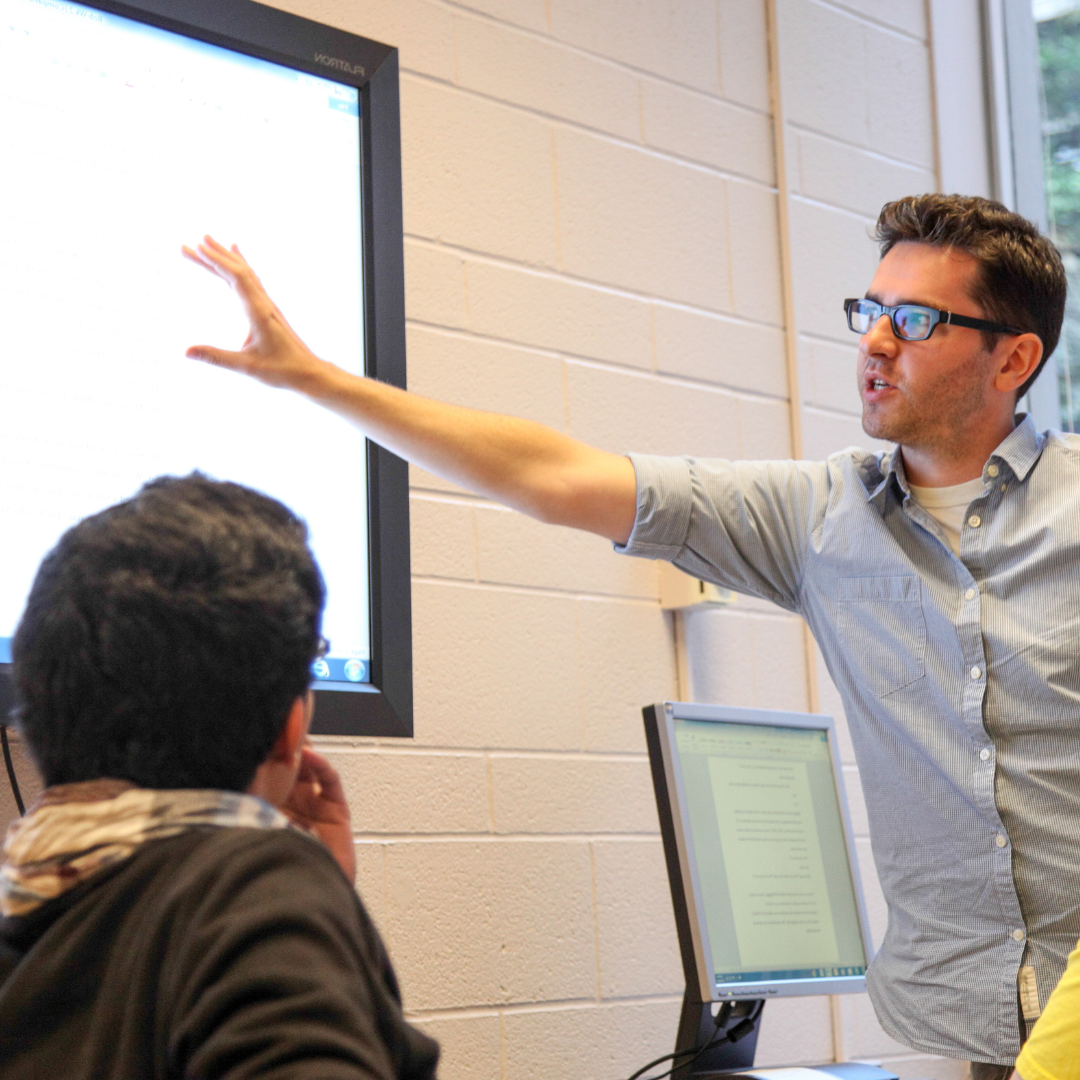
Communication skills are critical to engineering success. Engineering know-how is given added power when communicated with clarity and simplicity in presentations that are thoughtfully planned and effectively executed. In this course, each student will make a large number of short presentations to sharpen their skills and increase their confidence. Students will develop a range of skills: visual representation of data, systems and mechanisms; structuring and sequencing a talk; managing the tools, equipment and physical and psychological aspects of presentations; communicating complex subjects with clarity and concision; using their voice and body language to communicate persuasively; and strategies to increase audience engagement and connection.
TEP1026: The Happy Engineer - Positive Psychology for Engineers
Fall | Tues: 6 - 9 PM
Many disciplines have explored happiness – philosophy, anthropology, psychology, sociology, neurobiology, film, art and literature – to name a few. Why not engineering? During the first part of the course we will play catch-up, examining the scholarly and creative ways that people have attempted to understand what makes for a happy life. Then we turn our attention to our own domain-expertise, applying engineering concepts like “balance”, “flow”, “amplitude”, “dynamic equilibrium”, “momentum” and others to explore the ways that your technical knowledge can contribute to a deep understanding of happiness. This course is designed to challenge you academically as we analyze texts from a variety of disciplines, but it is also designed to challenge you personally to explore happiness as it relates to yourself, your own personal development and your success and fulfillment as an engineer.
TEP1010: Cognitive and Psychological Foundations of Effective Leadership
Winter | Tues: 6 - 9 PM
This semester's theme is Self-Leadership (because you can't lead anyone until you can lead yourself). The class is completed in teams of 4, (but worry not - there are no graded team assignments!). Together your team will work through themes related to self-leadership like self-discipline (why can't I keep my new year's resolutions?), resilience (how can hard times and failures make me stronger?), and motivation (how can I stay engaged when I don't feel like it?). You'll also embark on 3 wild self-leadership quests that will challenge you to walk your talk in practical ways. This course is designed to be highly challenging, but stress free. It's full of fun activities and deep, meaningful conversations with your classmates to help you navigate life.